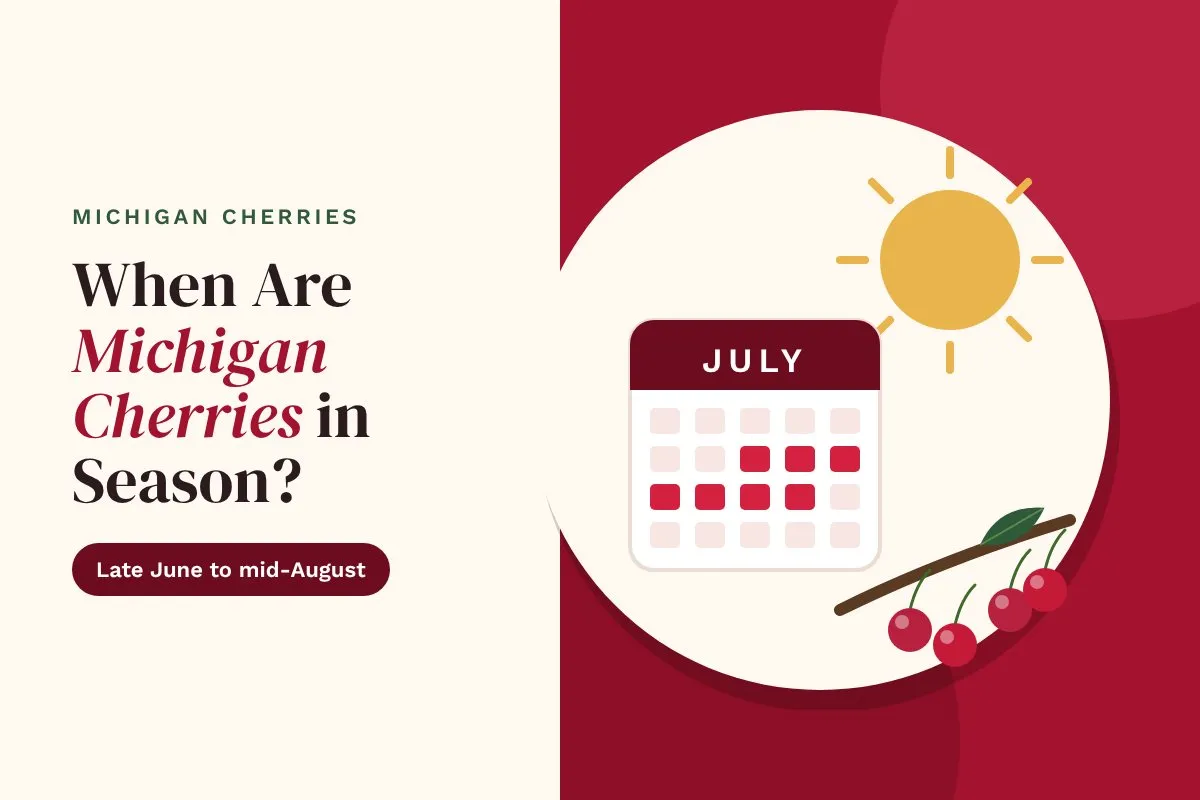
When Are Michigan Cherries in Season?
Short answer: Michigan cherries are in season from late June through mid-August. Sweet cherries ripen first, starting in late June or early July. Tart cherries, mostly the Montmorency variety, are harvested from about mid-July into early August. Exact dates shift a week or two each year depending on spring weather.
Cherry season in Northern Michigan is short and busy. For a few weeks every summer, roadside stands open along the Grand Traverse Bay, orchards run harvest crews from sunrise to sunset, and Traverse City hosts the National Cherry Festival. Here is what to expect and when.
Michigan cherry season at a glance
Sweet cherries: late June or early July through early August.
Tart cherries: about mid-July through early August.
Peak of the season: the second half of July, when both kinds are being picked.
National Cherry Festival: in Traverse City, usually the week leading up to the Fourth of July.
When sweet cherries are in season
Sweet cherries are the cherries you eat out of hand: dark red varieties like Bing and Black Gold and the yellow-and-blush Rainier. In Michigan they usually start in late June or the first week of July and run into early August, with early, mid-season and late varieties ripening one after another. Most are sold fresh, so this is when you'll see them at farm stands and markets.
When tart cherries are in season
Tart cherries ripen a little later, usually starting in mid-July. Around Traverse City, the Montmorency harvest typically runs from about mid-July into early August. Because tart cherries are soft and very perishable, nearly all of the crop is processed right away into frozen, dried, canned and juice products. Fresh tart cherries are only available for a few weeks, mostly at farm markets close to the orchards.
Why the dates change every year
Spring temperatures: a warm spring brings early bloom and an earlier harvest. A cool spring pushes everything later.
Frost: a late spring frost can damage blossoms and shrink the crop.
Location: orchards in southwest Michigan ripen earlier than orchards in the Traverse City area.
Variety: early, mid-season and late varieties spread the harvest over several weeks.
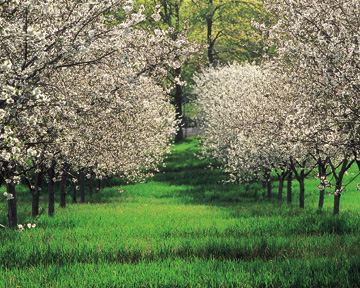
Cherry trees usually bloom in May. A warm spring brings bloom, and harvest, earlier.
Where to find Michigan cherries in season
Farm stands and u-pick orchards around Grand Traverse Bay, the Old Mission and Leelanau peninsulas, and along the Lake Michigan shoreline.
Farmers markets across Michigan from July into August.
Cherry shops and specialty stores in Northern Michigan that stock fresh cherries in season and cherry products all year.
How to enjoy Michigan cherries the rest of the year
Fresh tart cherries are gone by mid-August, but frozen, dried and canned Michigan tart cherries are available year-round. Frozen tart cherries are pitted and ready to use. See what to do with frozen tart cherries, or start with our Classic Michigan Tart Cherry Pie.
Frequently asked questions
What month are Michigan cherries in season?
July is the main month. Sweet cherries can start in late June, and tart cherries can run into early August.
When is the National Cherry Festival?
The National Cherry Festival is held in Traverse City every summer, usually the week leading up to the Fourth of July. Check the festival's website for the exact dates each year.
Can you buy fresh tart cherries outside of summer?
Rarely. Fresh tart cherries are only available for a few weeks in July and early August. The rest of the year, look for frozen, dried or canned tart cherries.
When do Michigan cherry trees bloom?
Usually in May. Bloom time depends on spring temperatures and is one of the first signs of how early or late the harvest will be.
Celebrate cherries in the middle of winter, too. February is National Cherry Month. Find out why February is National Cherry Month.
About the author: Andy LaPointe founded NationalCherryMonth.com and co-founded Traverse Bay Farms, a family-owned Northern Michigan tart cherry company, in 2001. He has spent more than 25 years working with Michigan cherries.
